

Electricity supply in Nigeria has become worse in 2026 mainly due to repeated national grid collapses, reduced gas supply to power plants, aging transmission infrastructure, and financial challenges in the electricity sector. Despite having over 13,000 MW installed capacity, actual available generation often falls below 5,000 MW, leaving millions without reliable power.
Why Electricity Supply Has Declined More Severely in 2026
Electricity supply across Nigeria has deteriorated significantly in early 2026, with more frequent and longer outages reported nationwide. Major cities including Lagos, Abuja, and Port Harcourt have experienced repeated blackouts, reflecting deeper operational and structural failures in the power sector.
According to reports from Daily Trust and other national outlets, the national grid has already suffered multiple collapses this year, reducing electricity generation to extremely low levels and disrupting supply across distribution networks.
Repeated National Grid Collapses Have Severely Disrupted Electricity Distribution.

One of the most immediate causes of worsening electricity supply is the increasing frequency of national grid collapses. In January 2026, electricity generation dropped to zero megawatts during one system failure, causing total nationwide outages. Reports from The Guardian confirmed that these collapses prevent electricity distribution companies from delivering power to consumers, even when generation capacity exists.
Each collapse destabilizes the system and takes hours or sometimes days to fully recover.
Actual Electricity Generation Remains Far below Installed Capacity
Although Nigeria has an installed generation capacity exceeding 13,600 megawatts, actual usable electricity remains much lower. Data released by the Nigerian Electricity Regulatory Commission showed that only about 4,901 MW was operationally available in January 2026—just 36 percent of total installed capacity.(Punch). This shortfall means the electricity system cannot meet national demand, resulting in constant shortages and load shedding. Gas supply shortages have reduced power plant output.
Nigeria relies heavily on gas-fired power plants for electricity generation. However, disruptions in gas supply, pipeline maintenance, and operational constraints have significantly reduced power output. Without sufficient gas, power stations cannot operate at full capacity, directly reducing electricity supply nationwide. Energy sector analysis cited by Reuters confirms that gas constraints remain one of the most important factors limiting electricity generation (Reuters).
Aging Transmission Infrastructure
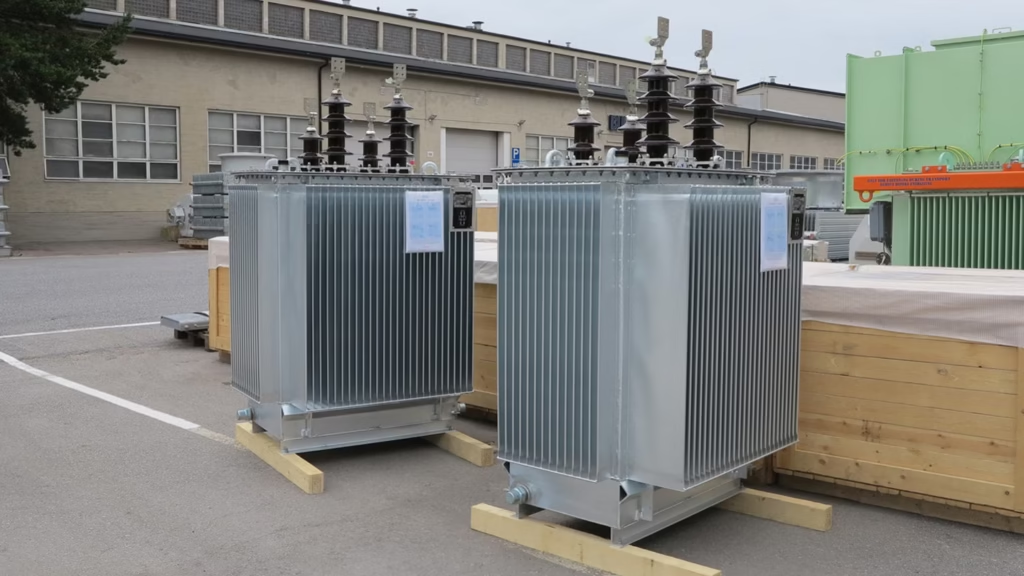
according to Nairametrics, has made the power system more fragile
Nigeria’s transmission infrastructure, managed by the Transmission Company of Nigeria, remains vulnerable due to aging equipment, insufficient upgrades, and capacity limitations. Transmission lines and substations frequently operate near their limits, making them more likely to fail when disturbances occur. Infrastructure damage, technical faults, and vandalism further weaken the system and contribute to repeated grid instability.
Financial and Structural Challenges Continue to Limit Long-term Improvements

The electricity sector also faces major financial challenges, including debt owed to generation companies and insufficient investment in infrastructure upgrades. These financial constraints limit maintenance, expansion, and modernization efforts. As electricity demand continues to grow with population and economic activity, the gap between supply and demand has widened further, worsening reliability.
Businesses and Households Face Growing Economic and Social Consequences
The worsening electricity supply has forced millions of Nigerians to rely on private generators, significantly increasing operating costs for households and businesses. Small enterprises such as salons, cold-room operators, and workshops are especially affected, as unreliable electricity disrupts productivity and profitability. This dependence on alternative power sources highlights the scale of the ongoing electricity crisis.
The outlook remains uncertain without major reforms and infrastructure investment

Experts agree that electricity supply may remain unstable throughout 2026 unless significant improvements are made in gas supply reliability, transmission infrastructure upgrades, and financial restructuring of the power sector. While government reforms and investments are ongoing, restoring stable and reliable electricity across Nigeria will require sustained technical, financial, and structural changes.
More on the Nigerian economic state
Discover more from tienski.com
Subscribe to get the latest posts sent to your email.